
 ·
Updated Feb 20, 2026
·
·
Updated Feb 20, 2026
·
This content contain affiliate or advertising links. If you click and make a purchase, we may receive a commission. Your price is not affected.
























Bridge loan in Sweden is the financial shortcut many homeowners don’t realize they need—until their dream home risks slipping away. Whether you’re buying a new property before your current one is sold or facing a short-term liquidity gap, a bridge loan gives you fast access to capital when traditional financing falls short. These loans are designed to fill the gap between buying and selling, offering flexibility and speed in a market where timing is everything.
Used wisely, a Swedish bridge loan can be the key to securing your next home without delays, bidding wars, or lost opportunities. But how do they work, and what should you know before applying? Let’s break it down.
What Is a Bridge Loan?
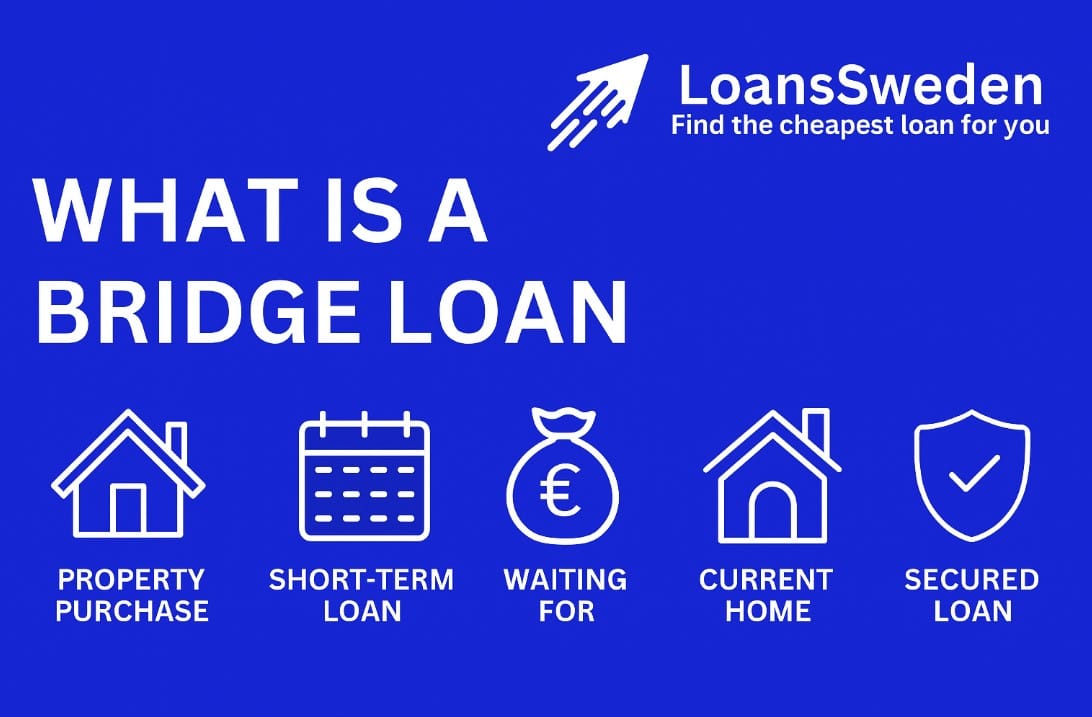
A bridge loan is a short-term loan that helps you finance a property purchase before you’ve sold your current home. It “bridges” the financial gap between the two transactions—letting you move forward without waiting for sale proceeds.
In Sweden, bridge loans are often used in the housing market, especially when buying in a competitive area or when your old home hasn’t sold yet. The lender provides you with funds secured against either your existing or new property, with the understanding that the loan will be repaid once your current property is sold.
Bridge loans in Sweden typically have:
- Terms of 3 to 12 months
- Interest-only monthly payments
- Final repayment in full once your property sale closes
They are available through major Swedish banks, mortgage brokers, and some private lenders. Because they are based on property value and equity, bridge loans often offer larger amounts than personal loans, though with a higher interest rate than standard mortgages.
When Do You Need a Bridge Loan in Sweden?
Bridge loans are most useful when you need to act fast in the housing market—but don’t yet have funds from your current property sale. In Sweden, timing is often critical, especially in larger cities like Stockholm, Göteborg, and Malmö, where demand moves quickly.
Here are the most common situations where a bridge loan makes sense:
- You’ve found a new home but haven’t sold your current one
You want to secure the new property before someone else does, but your equity is still tied up in the home you’re leaving. - Your property is under contract, but the sale hasn’t closed
There may be weeks or months between signing and final payment. A bridge loan keeps your buying timeline moving. - You’re upgrading or relocating and need liquidity
Whether you’re upsizing or moving for work, the loan gives you short-term flexibility. - You’re building or renovating a new property
Use the funds to cover construction costs while waiting for your old home to sell.
Bridge financing is not designed for long-term use. It’s a tactical, time-sensitive solution that gives you control over your property transaction, without rushing into a low offer just to unlock funds.
How to Apply for a Bridge Loan in Sweden
Applying for a bridge loan in Sweden is a structured but relatively fast process—especially if your documentation is in order. The key is to show the lender that you own a property with sufficient equity and have a realistic plan to sell it soon.
Here’s how the process works:
Step 1: Get your property valued
Lenders will base the loan amount on the market value of your current home. Most will require an independent valuation to confirm this.
Step 2: Prepare your sale plan or agreement
Some lenders accept a signed sales contract; others are willing to proceed if your property is listed and marketable.
Step 3: Collect your documentation
You’ll typically need:
- Proof of income (salary, pension, or tax returns)
- Mortgage statements
- Ownership documents (lagfart/bevis)
- Purchase agreement for your new home
Step 4: Compare offers
Bridge loan rates and terms vary widely between banks and brokers. Use a loan broker or comparison platform to find the most favorable deal.
Step 5: Apply and await approval
Once submitted, most lenders will give you a decision within a few days—sometimes faster if the case is urgent.
Step 6: Sign and receive the payout
You sign the contract digitally or in-person. Funds are paid out in one lump sum, ready to use for your new property transaction.
Some providers allow you to apply fully online. In other cases, your bank or mortgage advisor will guide you through the offer manually.
Who Can Apply for a Bridge Loan in Sweden?
Bridge loans in Sweden are primarily available to individuals who own residential property and have sufficient equity. Lenders assess your ability to repay once your existing home is sold—so the stronger your position, the higher your chances of approval.
To qualify, you typically need to meet the following criteria:
- Be a Swedish resident with a personal identity number (personnummer)
- Own or be in the process of selling a property in Sweden
- Have a signed purchase agreement for the new property
- Show proof of income (e.g. salary, pension, or business income)
- Possess enough equity in your current home to cover the loan
Foreign citizens with permanent residence in Sweden and ownership of Swedish property can also apply, though some banks may require additional documentation or collateral.
In most cases, lenders will only approve bridge loans if your current property is either listed for sale or already under a sales agreement. The more advanced the sale process, the less risk the lender takes on—improving your odds of approval and lowering the offered interest rate.
How Does a Bridge Loan Work?
A bridge loan in Sweden provides short-term financing, secured by your current or new property, to help you complete a purchase before selling your existing home. It’s structured as a temporary loan—often interest-only—designed to be repaid once your current property is sold.
Loan structure
- Loan term: Typically 3 to 12 months
- Repayment model: Most bridge loans are interest-only, with the full principal repaid in a single payment at the end of the term
- Collateral: The loan is secured by the property you’re selling, or in some cases, by both the old and new properties
Example workflow
- You sign a purchase agreement for a new home
- Your current property is not yet sold
- You apply for a bridge loan based on the equity in your existing home
- The lender approves a loan amount equal to part of the expected sale value
- You use the bridge loan to complete the new purchase
- Once your old home sells, you use the proceeds to repay the loan in full
Loan size and equity
The amount you can borrow depends on how much equity you have in your current property. Most lenders offer up to 80% of the market value, minus any outstanding mortgage.
Bridge loans give you the flexibility to buy without delay, while avoiding the pressure to sell your old home too quickly or below market value.
Key Features of Bridge Loans in Sweden
Bridge loans are designed for speed, flexibility, and short-term use, but they come with distinct features that set them apart from traditional mortgages or personal loans. Understanding these features helps you assess if a bridge loan fits your situation.
Short loan terms
Bridge loans typically have a duration of 3 to 12 months, depending on your expected property sale timeline. Some lenders may offer extensions, but the goal is short-term financing.
Interest-only payments
During the loan term, you often pay only the interest, with the full loan amount due at the end. This keeps monthly payments low while you wait to sell your property.
Higher interest rates
Compared to regular mortgages, bridge loans have higher interest rates—usually between 4% and 9%, depending on the lender and risk profile. The short term makes the overall cost manageable, but the rate reflects the added risk for the lender.
Collateral-based lending
The loan is secured against your current property, the one you’re buying, or both. A formal valuation is usually required to confirm market value and available equity.
Fast processing and approval
Since bridge loans are time-sensitive, banks and brokers often prioritize applications. If your documentation is ready and property valuation is clear, you can often receive approval and payout within a few days.
Bridge Loan vs. Traditional Mortgage – What’s the Difference?
While both bridge loans and traditional mortgages help you finance property, they serve very different purposes. A mortgage is designed for long-term ownership financing, whereas a bridge loan is a temporary financial solution to manage timing between two property transactions.
Here’s how they compare:
| Feature | Bridge Loan | Traditional Mortgage |
|---|---|---|
| Purpose | Short-term gap financing | Long-term home financing |
| Loan Term | 3–12 months | 10–30 years |
| Monthly Payments | Often interest-only | Full amortization (interest + principal) |
| Interest Rate | Higher (4–9%) | Lower (1–3.5%) |
| Collateral | Current or new property | Newly purchased property |
| Approval Speed | Fast (1–5 days) | Slower (1–3 weeks) |
| Used For | Buying before selling | Buying with long-term repayment |
| Repayment | Lump sum after sale of old home | Paid monthly over loan term |
Key takeaway
A bridge loan gives you short-term financial flexibility in property transactions, while a mortgage is your long-term financing tool. Many Swedish borrowers use both: a bridge loan to secure the next home, and a traditional mortgage after the bridge loan is paid off.
Example: Using a Bridge Loan for a Property Purchase
Here’s how a bridge loan in Sweden might work for you if you’re buying a new home before selling your current one.
Scenario:
You own an apartment in Malmö valued at SEK 3,000,000. You still owe SEK 1,700,000 on your mortgage. You’ve just found your dream home in Lund priced at SEK 4,200,000, but you haven’t sold your current apartment yet.
To move forward without delays, you apply for a bridge loan secured against your existing home.
| Detail | Amount (SEK) |
|---|---|
| Current apartment value | 3,000,000 |
| Remaining mortgage | 1,700,000 |
| Available equity | 1,300,000 |
| Bridge loan amount approved | 1,100,000 |
| Interest rate (6-month term) | 6.5% |
| Monthly interest-only payment | ~6,000 |
| Final repayment after sale | 1,100,000 + interest |
How it plays out:
- You’re approved for a SEK 1.1 million bridge loan
- You use it to help finance the purchase of the new home
- Two months later, you sell your apartment for SEK 2.950.000
- You repay the full bridge loan using proceeds from the sale
- You switch to a regular mortgage for the remainder of your new home’s financing
This approach lets you secure your next property without pressure to sell fast or accept a low offer—giving you both flexibility and peace of mind.
What Are the Risks and Downsides?
Bridge loans offer speed and flexibility, but they also come with risks that shouldn’t be ignored. Since they’re tied to the future sale of your current property, the biggest risk is simple: what if your home doesn’t sell in time?
Here are the main downsides to consider:
- You still pay interest even if your property doesn’t sell
Delays in selling can extend your loan term and cost you more in interest. - High interest rates and fees
Bridge loans in Sweden usually carry higher interest than standard mortgages—often 5–9% annually, plus setup fees or valuation costs. - Repayment risk if your sale falls through
If the buyer backs out or the market shifts, you may be forced to repay from other sources or refinance. - Pressure to sell under time constraints
Even though a bridge loan gives you some flexibility, it has an expiration date. You may still feel pressure to accept a lower offer as the deadline approaches. - Limited loan-to-value (LTV)
Lenders won’t loan 100% of your equity. If your property has low or uncertain value, you may receive less than you expected.
Bridge loans are not ideal if you’re unsure about your sale timing or already stretched financially. Used responsibly, however, they can be a powerful tool to manage real estate transitions on your terms.
Where to Get a Bridge Loan in Sweden
Bridge loans in Sweden are offered by a mix of major banks, specialized mortgage lenders, and financial intermediaries. Availability and terms vary significantly, so it’s essential to compare providers before committing.
Some of the largest Swedish banks, such as Swedbank, Handelsbanken, SEB, and Nordea, offer bridge financing—especially if you already have a mortgage with them. However, their approval times may be slower, and the conditions more strict.
You’ll also find bridge loans through mortgage brokers and independent financial advisors, who often work with multiple lenders and can negotiate better terms.
To simplify the process, you can use our curated list of Swedish loan providers above to compare offers and find a lender that fits your needs. Each listed provider has been reviewed for reliability, payout speed, and transparency.
Whether you go through a bank or a broker, always check:
- Maximum loan amount based on equity
- Interest rate and term length
- Fees and early repayment options
FAQ
Bridge Loans in Sweden
No. Bridge loans are conditional on selling your current property. Most lenders require it to be listed or under contract before approval.
If your documents are in order, you can often get approved and funded within 2–5 business days. Brokers may offer faster processing than large banks.
No, but you must have sufficient equity. Lenders typically loan up to 80% of your property’s market value, minus any outstanding mortgage.
Yes, if you’re a resident in Sweden with a Swedish personal number and you own property. Non-residents or temporary permit holders may have limited options.
Yes. Once your old home is sold, you can often convert your bridge loan into a traditional mortgage to cover remaining financing on the new home.
You may face extra fees or need to extend the loan, if the lender allows. In the worst case, you’ll need to refinance or repay from other assets.